
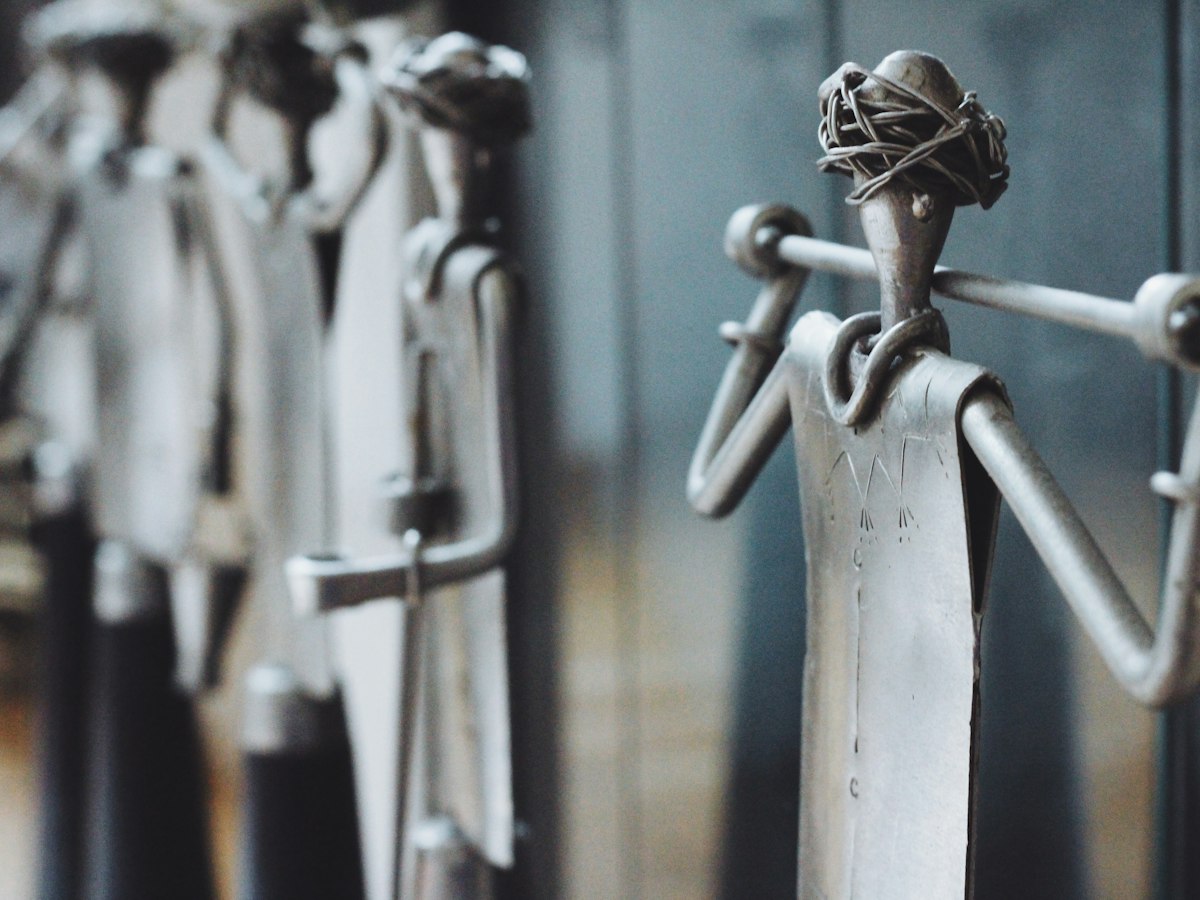
Most people know Harry Bertoia for a chair. The wire Diamond chair he designed for Knoll has been in production since the early 1950s. For the last eighteen years of his life, though, he mostly made something else: sculptures that you play. They are stands of thin metal rods that sway and ring when you brush them with a hand.
The room these pieces were made for is a stone barn on Bertoia's property in Barto, Pennsylvania. They can no longer be heard there. The Harry Bertoia Foundation says the barn collection has been dismantled and the building is in disrepair. What follows is how that happened and where the sculptures can still be heard.
The chair that paid for it
Bertoia was born in San Lorenzo, Italy, in 1915. He entered the Cranbrook Academy of Art in 1937 and reopened its metal workshop two years later. Among the things he made there was a wedding ring for Ray Eames.
In 1950 he moved to Pennsylvania to work with Knoll. The Diamond chair was shown in 1952. According to the foundation, Knoll paid him an additional sum for permanent rights to the chairs, and that money paid for the farmhouse.
How they work
The foundation dates the first sounding pieces to 1960. The principle is simple. Vertical rods are fixed in rows to a flat metal base and left free at the top. Some are capped with small cylinders, known as cattails. Bertoia worked in brass, bronze, beryllium copper, aluminum and nickel alloys.
The pieces range from six inches high to twenty feet. Nearly all are unique. In the mid-1970s he added gongs and hanging bars. The name he gave the work was Sonambient.
The barn
In the late 1960s Bertoia converted the old stone barn on the property into a room for the sculptures. At his death it held about ninety of them. Several accounts give the number as 91.
From 1970 he recorded there with his brother Oreste, until Oreste's death in 1972. The archive runs to 360 tapes. He issued one LP in 1970 and prepared ten more in 1978, which came out after his death that November. He is buried behind the barn, under a bronze gong said to weigh a ton.
What happened to it
After 1978 Bertoia's son Val, who makes sounding sculpture himself, maintained the barn and gave tours and concerts. Then the family divided. A lawsuit brought by his sisters ended in 2016, and the collection was split. Metropolis reported in 2018 that 60 pieces went to Bertoia's daughter Celia, 19 stayed with Val, and 13 went to the foundation as a traveling exhibit.
In December 2019 the 60 pieces were set up at Sotheby's in New York, with daily concerts, in the hope of attracting a museum that would take them. In December 2021 Sotheby's sold 24 lots from the barn collection at auction, to benefit a complete catalogue of Bertoia's work.
The foundation, which Celia Bertoia directs, now holds 40 pieces from the barn. It is offering them as a group to a museum or public venue that can provide good acoustics, trained players and room for about fifty listeners. No home has been announced. We could not establish whether Val Bertoia still opens the barn to visitors; his studio's website lists no tours.
Where to hear them now
St. George, Utah. The foundation keeps a gallery there with sounding pieces and a five-foot gong, and Celia Bertoia gives concerts. A series ran on Fridays in June 2026. Contact the foundation before you travel.
Museum and gallery shows. The sculptures were played at set hours at the Museum of Arts and Design in New York in 2016 and in a concert series at the Nasher Sculpture Center in Dallas in 2022. Pieces from the barn were lent to the Bruce Museum in Connecticut in 2023 and 2024. At the Hosfelt Gallery in San Francisco in 2025, a reviewer noted, visitors were allowed to touch them. Watch for the next one.
Chicago. A sounding sculpture commissioned by Standard Oil in 1975 was installed on the plaza of what is now the Aon Center, with rods sixteen feet tall that the wind plays. Our source for it is an old one, so confirm it is on view.
At home. Important Records has reissued all eleven Sonambient albums as a boxed set. It is the closest most of us will get to standing in the barn.
What they cost
The auction record is reported as $422,500, paid at Christie's in 2012 for a piece from 1975. Smaller ones cost far less: a 24-inch example sold at Wright in October 2025 for $40,640.
What cannot be bought is the thing Bertoia spent his last decade assembling, which was the room: some ninety pieces in a stone barn in the Pennsylvania countryside. What is left of it needs a new home.